
Makers & crafts
Studio software for makers who outgrew the spreadsheet
One catalogue for your studio, your site, your invoices, and your shipping labels, whether you sell on your domain, at a fair, or still list on Etsy.
Same platform as artists and galleries. Read how direct sales and Etsy work together.
Run the studio on one platform
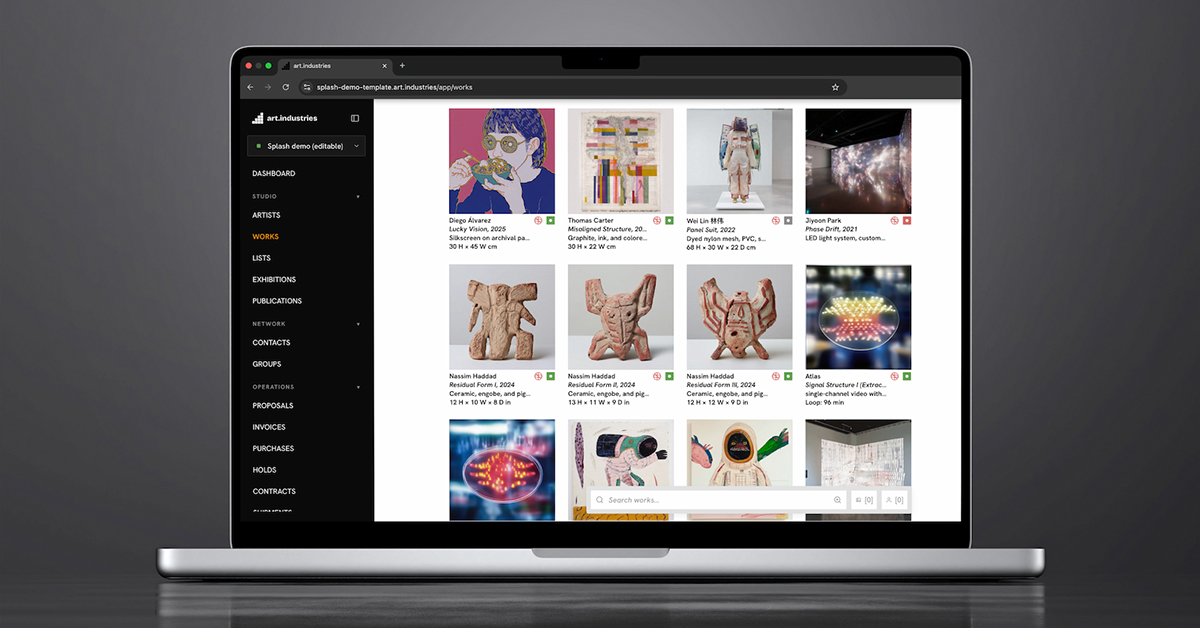
Piece inventory
Photos, materials, dimensions, price, location, and status on every piece, rename "Artworks" to "Pieces" or "Products" in Settings.
InventoryStorefront on your domain
Sell editions, one-offs, and made-to-order work through Stripe checkout on a site you control.
Online storefrontCustomer CRM
Repeat buyers, wholesale accounts, and fair contacts in one list, linked to what they actually purchased.
CRMInvoices & wholesale
Send invoices to stockists, take deposits, and print packing lists from the same records.
InvoicingWebsite from your catalogue
Portfolio, shop, and about pages pull from live inventory, no duplicate product list in Squarespace or Shopify.
Website builderKeep Etsy for discovery
Most makers who succeed on Etsy do not quit Etsy on day one. They use it for search traffic and social proof, then build repeat sales on a site they own.
- Etsy brings strangers; your storefront and email list bring customers back without marketplace fees.
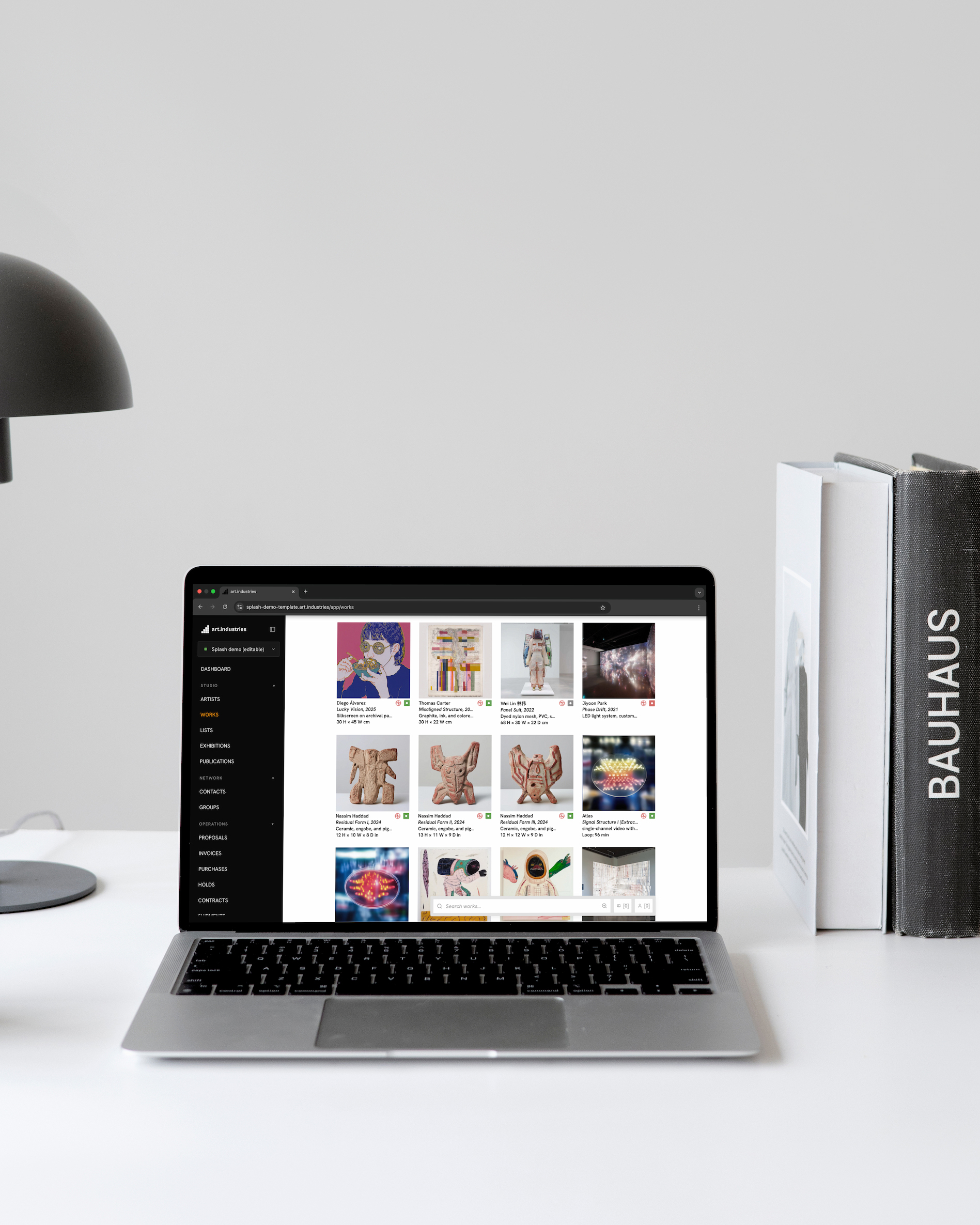
One catalogue, not three tabs
The failure mode is familiar: Etsy says "1 left", your spreadsheet says "2", and Instagram DMs sold one yesterday.
- Core covers inventory, contacts, Stripe sales, and viewing rooms for private wholesale previews.
- Advanced adds Website Studio, custom domain, campaigns, and the public storefront, the upgrade most full-time makers hit around $30k–$100k in annual direct sales.
- Import from CSV (including exports from other tools). Ship with Shippo labels when you connect live rates.
- Customize nav labels so the UI reads like your craft, pieces, products, collections, not gallery jargon.
FAQ
- Can I keep selling on Etsy?
- Yes. Many makers use Art.industries as their studio hub, inventory, direct site sales, wholesale invoices, and customer list, while Etsy stays live for marketplace discovery. You manage Etsy listings in Etsy; your canonical stock count lives here. See Sell on your site and keep Etsy.
- Is this only for fine art?
- No. Ceramics, textiles, furniture, and other studio crafts use the same catalogue, CRM, and checkout flows. Contemporary jewelry galleries and retail jewelers often start on Software for jewelers. Rename key terms in Settings (e.g. "Artworks" → "Pieces") so the interface matches how you talk about your work.
- How is this different from Shopify?
- Shopify is a storefront; you still need a CRM, consignment tracking, and fair-prep lists somewhere else. Art.industries reads one inventory record into your site, invoices, and campaigns. Makers who also wholesale to shops get consignment and statement flows Shopify does not ship.
- Does it work for limited editions and one-offs?
- Yes. Edition runs track each copy (1/25 through 25/25); unique pieces are single records with availability status. The public storefront and your site stay aligned because they read the same catalogue.
- What about ring sizes, weight, and craft-specific measurements?
- Height, width, depth, weight, ring size (US/UK/EU), chain length, gauge, and carat weight are built into the dimensions editor on every piece. Use custom fields for gem certificates or glaze codes; see Software for jewelers for stone-level detail.
- What does free Core include for a solo maker?
- Core (no card required) covers inventory, CRM, viewing rooms, invoicing, and Stripe payment links up to the entry capacity tier. Advanced ($30/month) adds your own-domain website, email campaigns, and the public storefront. See pricing.
- Can I sell at craft fairs and track what came home?
- Yes. Location and availability status on each piece; mark works as sold at the booth, reserved for a wholesale buyer, or back in studio storage. Export a checklist PDF before the fair and reconcile against sales when you return. See Craft fairs software for the full booth workflow.
Catalogue ten real pieces on free Core
Import or enter the pieces you actually sell, connect Stripe, and send one payment link. If the loop works for ten, it scales to your whole studio.