
ResourcesArticle
Art inventory management: why galleries need a different approach
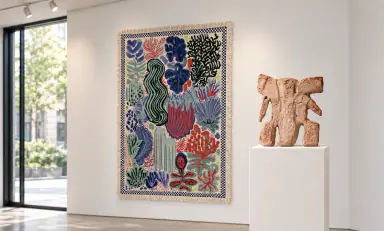
A painting is hanging in your gallery. It belongs to the artist, is reserved for a collector, and is due to leave for an art fair next week.
Where is it? Who owns it? Can you offer it to someone else? Each question has a different answer. Yet in a basic inventory, the painting might have a title, a price and a single status: “in stock”. The rest lives in emails, agreements and someone’s memory.
Art inventory management means keeping each work’s identity, ownership, location, availability and history connected. The catalogue describes the object, but it also supports decisions: whether to include it in a presentation, arrange transport, confirm a sale or return it to the artist.
Location, ownership and availability are separate
Galleries regularly hold works they do not own and own works held elsewhere. A painting may be on consignment from an artist. A gallery-owned sculpture may be on loan to a museum. A sold work may still be hanging in an exhibition.
One status cannot explain all of this. The record needs to distinguish:
- Location: where the work is, with enough detail to find it.
- Ownership and terms: who it belongs to and which agreement governs the gallery’s involvement.
- Availability: whether it can be offered, who has reserved it and until when.
These distinctions answer everyday questions. Does a discount need the artist’s approval? Is the consignment about to expire? Can a buyer collect the work before the exhibition closes?
The information should be visible when someone needs to act on it.
Cataloguing artwork takes more than a name and size
An artwork’s description identifies the object, provides its catalogue caption and helps people handle, install and transport it.
“120 × 90 cm” is useful only if the reader knows what was measured. A painting’s framed and unframed dimensions serve different purposes. A photograph may need image and sheet measurements. A sculpture may have several components or specific installation requirements.
Materials, signatures, inscriptions and labels also help identify the work. Recording them properly can save someone from having to unpack or unframe it later.
The fields need to suit the works the gallery handles. Video may require duration and equipment details; an installation may need component lists and assembly instructions. Images need similar care: a catalogue photograph, an installation view and a condition detail belong together, but should be easy to distinguish.
The artwork record continues after a sale
A collector may request a replacement certificate years after a purchase. A museum may ask about an exhibition. The gallery may need to find an old invoice or help arrange a resale.
That makes the artwork record a continuing resource. Its histories describe different things:
- Provenance records ownership.
- Exhibition history records where the work has been shown.
- Literature records publications that reproduce or discuss it.
- Condition reports document observations at particular dates.
A museum loan can add to exhibition history without changing ownership. A new condition report needs to sit alongside earlier reports so they can be compared.
New information should add to the record while preserving what was known before. Gaps and uncertainties should remain explicit.
An edition is a group of individual objects
An edition shares information: artist, title, technique and edition size. Each numbered copy has its own circumstances.
One copy may be framed at the gallery, another unframed at the studio, and a third already sold. Their condition, location, availability and sales history can differ.
A useful inventory connects shared edition information to individual copy records. This avoids repeatedly entering the same description while allowing the gallery to answer a precise question: “Is copy 4 of 20 available, and where is it?”
The same information needs to work in different places
A collector’s presentation, a shipping document and an internal consignment record need different selections of information about the same work.
If each requires a separate copy, every change creates another update. A corrected caption may reach the website but miss a PDF. A reservation may be recorded in an email while the work remains on an availability list.
A connected catalogue lets the gallery prepare these materials from the information it already maintains, with control over what is public, shared privately or kept internal.
What galleries need from art inventory software
A spreadsheet can be a useful starting point. As more works, people and commitments become involved, the connections between them become harder to maintain.
When assessing art inventory software, start with real tasks: find a work, check its consignment agreement, reserve an edition copy or prepare a collector’s presentation. Check whether your team can complete them without retyping information or searching through separate files.
Art.Industries brings artwork records together with the website, private presentations, contacts and sales that use them. The aim is to maintain a dependable record as each work moves through the gallery’s activities—so the next answer is easy to find.
Art.Industries
Keep every artwork record connected, from consignment to sale.
More resources
Free tool
Free certificate of authenticity maker
Fill in the work, add an image and sign it. Preview the certificate as you type and download a print-ready PDF.
Art
Certificate · Free21 Oct 2026
Free tool
Free art hanging calculator
Enter the frame size and hanger drop to get the nail height, for one work or a row.
Art
Calculator · Free19 Oct 2026